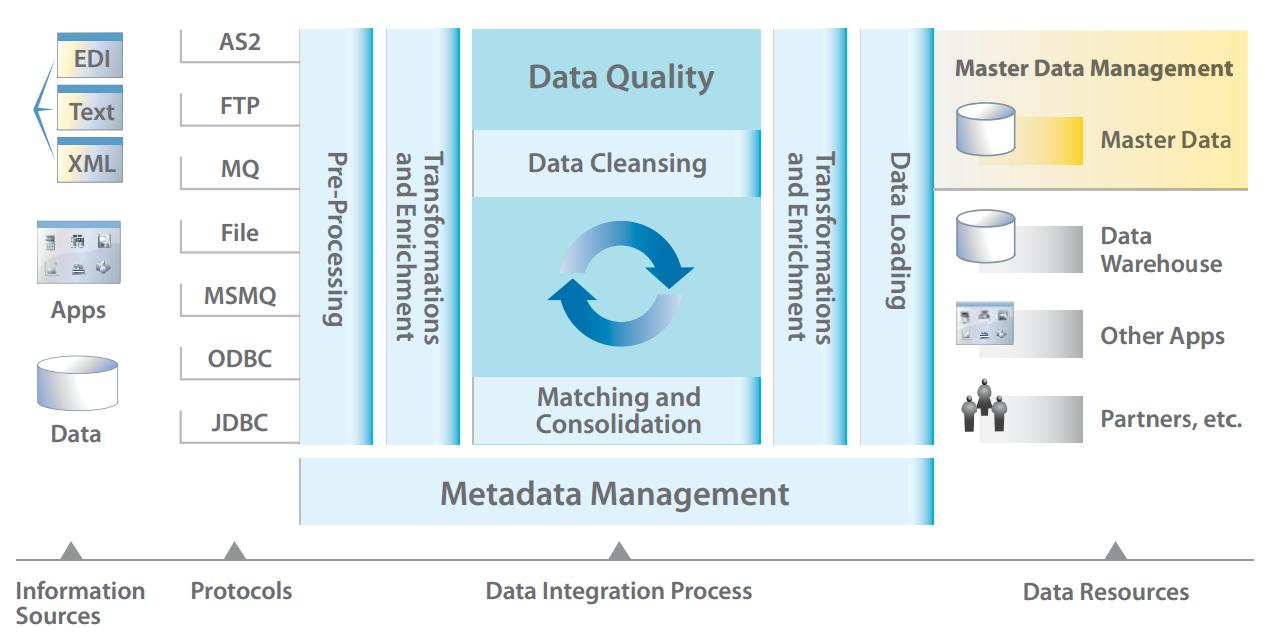
Data Integration (DI), sounds simple but it in reality it is the most complicated discipline. Data Integration allows you to integrate disparate data sources into a single coherent framework, for real-time reporting and detailed analysis in your organization. A good Data Integration system would let the departments within organizations view information from various disparate sources in a unified way for their business analysis.
Our Pro's in this area does::
Gathering business requirements
Determining data and quality needs
Data profiling or understanding data sources and associated quality both in the source system and across multiple source systems, if applicable
Defining the gap between what data is available and its quality versus what the business has requested
Revising business expectations or project costs and determining the selected data solution
Modeling the data stores necessary - staging areas, data warehouse, operational data store and data mart(s) - both from a logical perspective (to confirm business requirements) and a physical perspective (to enable implementation)
Define the ETL architecture and the strategy
Develop the ETL process
Test and support the Data Integration environments